A Community Action Agency Serving Western North Carolina

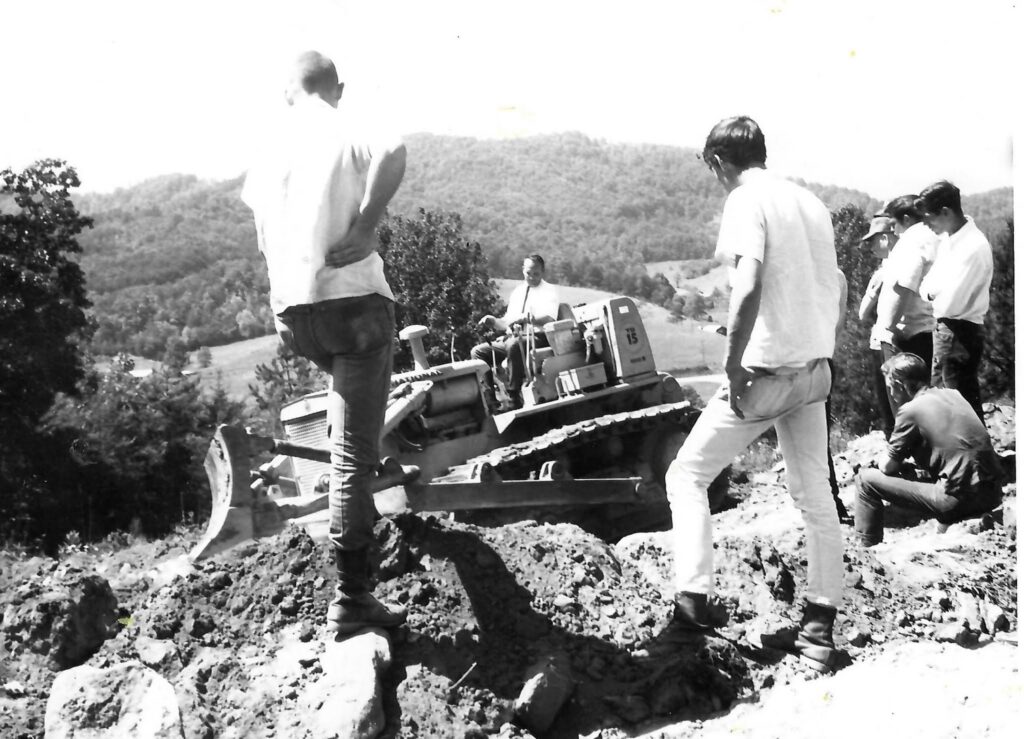
For more than 60 years, Mountain Projects has been a lifeline in Haywood and Jackson Counties—helping neighbors build brighter futures, stronger families, and healthier communities. We believe in the power of helping people help themselves. Through housing, transportation, senior care, early childhood education, workforce development, and more, our programs meet people where they are and connect them to the tools they need to thrive.
Every story matters. Every person matters. And together, we’re making Western North Carolina a place where everyone has the chance to live with dignity, security, and hope.

Knowing Mountain Projects

At Mountain Projects, we believe everyone deserves a safe environment and work daily to support the social, economic, educational, emotional, and health needs of our clients. We currently operate 20 grant-funded advocacy programs, while continually developing new services to address our region’s unique challenges. 

Our board represents all segments of the local population, including community members, organizational leaders, and elected officials from Haywood and Jackson counties. Together, we plan outreach efforts and create comprehensive programs to enhance community wellbeing.

Year Funded
0
Employees
0
Programs
0
Annual Budget
0 M

Community Action FAQ

Community Action Agencies help individuals and families meet basic needs and work toward long-term stability. Services may include:

  • Energy assistance (LIHEAP)
  • Weatherization and home energy improvements
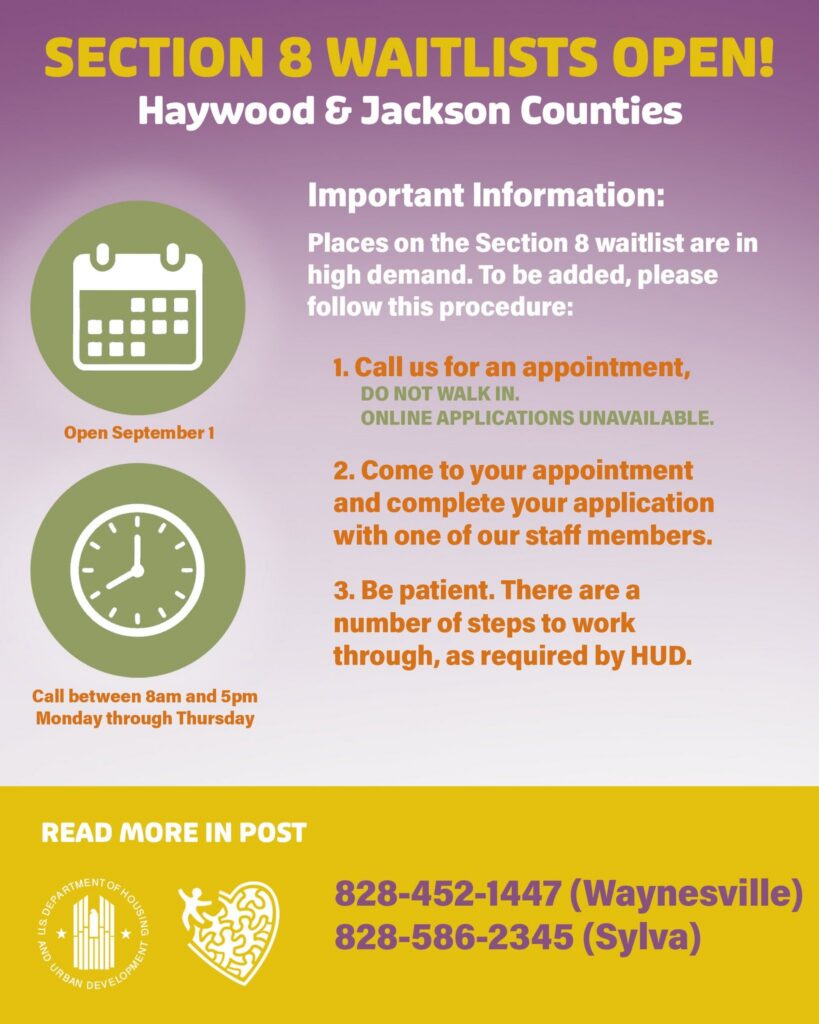
  • Housing assistance and referrals (including Section 8 support)
  • Early childhood programs such as Head Start
  • Food assistance and referrals
  • Workforce training and financial education

Services vary by location, funding availability, and eligibility.

Most programs serve households based on:

  • Household income (often tied to Federal Poverty Guidelines)
  • Household size
  • Residency in the agency’s service area
  • Program-specific requirements

Eligibility is determined during your intake appointment.

Applying usually includes:

  1. Contacting the agency or scheduling an intake appointment
  2. Gathering required documents
  3. Attending your intake appointment (in person, by phone, or online)
  4. Staff reviewing eligibility and available funding
  5. Being notified of next steps

Completing an intake appointment does not guarantee assistance.

Most programs require documents for all household members, including:

  • Photo ID
  • Birth Certificate
  • Social Security cards or documentation
  • Proof of income from the last 30 days
  • Proof of address
  • Program-specific documents (utility bill, lease, eviction notice, etc.)


If you are missing documents, contact the agency before your appointment.

Processing times vary depending on:

  • Program funding
  • Time of year
  • Number of applications received

Some programs are seasonal and may have waitlists.

Most Community Action services do not count as income and usually do not affect benefits such as SNAP, SSI, Medicaid, or housing assistance. Staff can answer questions specific to your situation.

If you are not eligible for a specific program, staff may:

  • Refer you to other community resources
  • Place you on a waitlist

Share information about future funding opportunities

Last Year at a Glance

Current Partners

Featured Program: Section 8 Housing

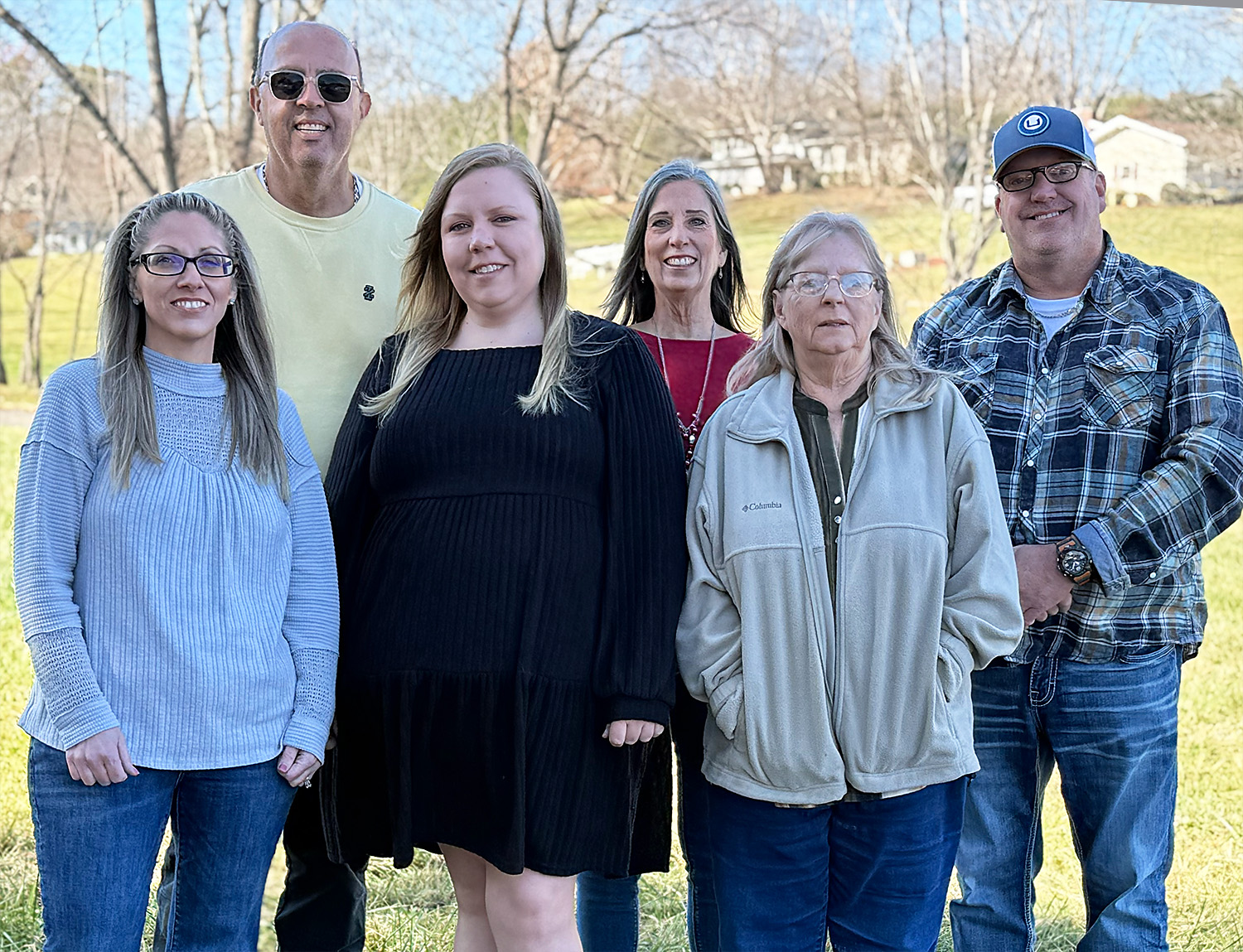
Section 8 staff: Nicole Parton, Oscar Vazquez, Amanda Singletary, Anne Velez, Paula Robinson and Chad Hall.

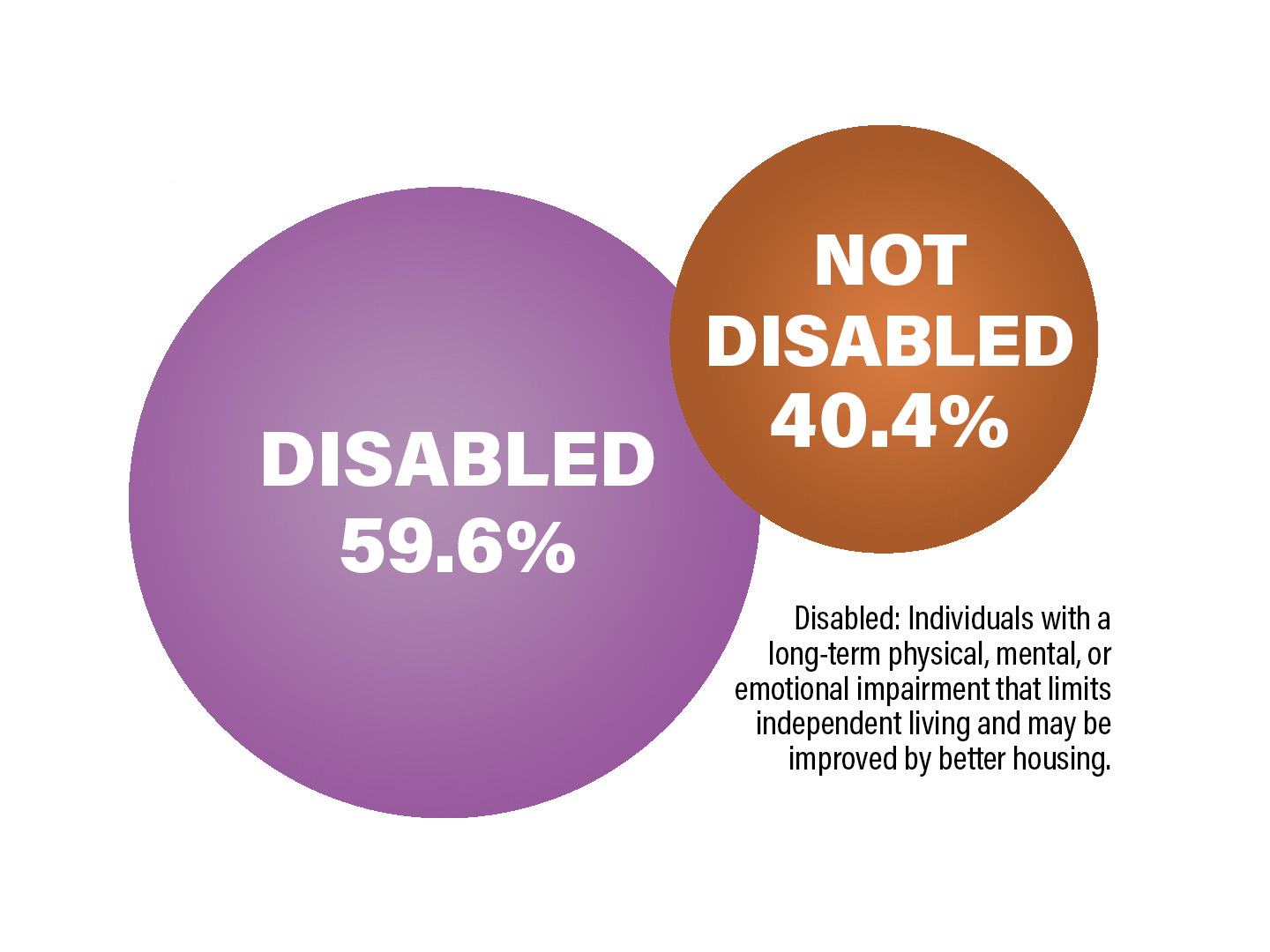
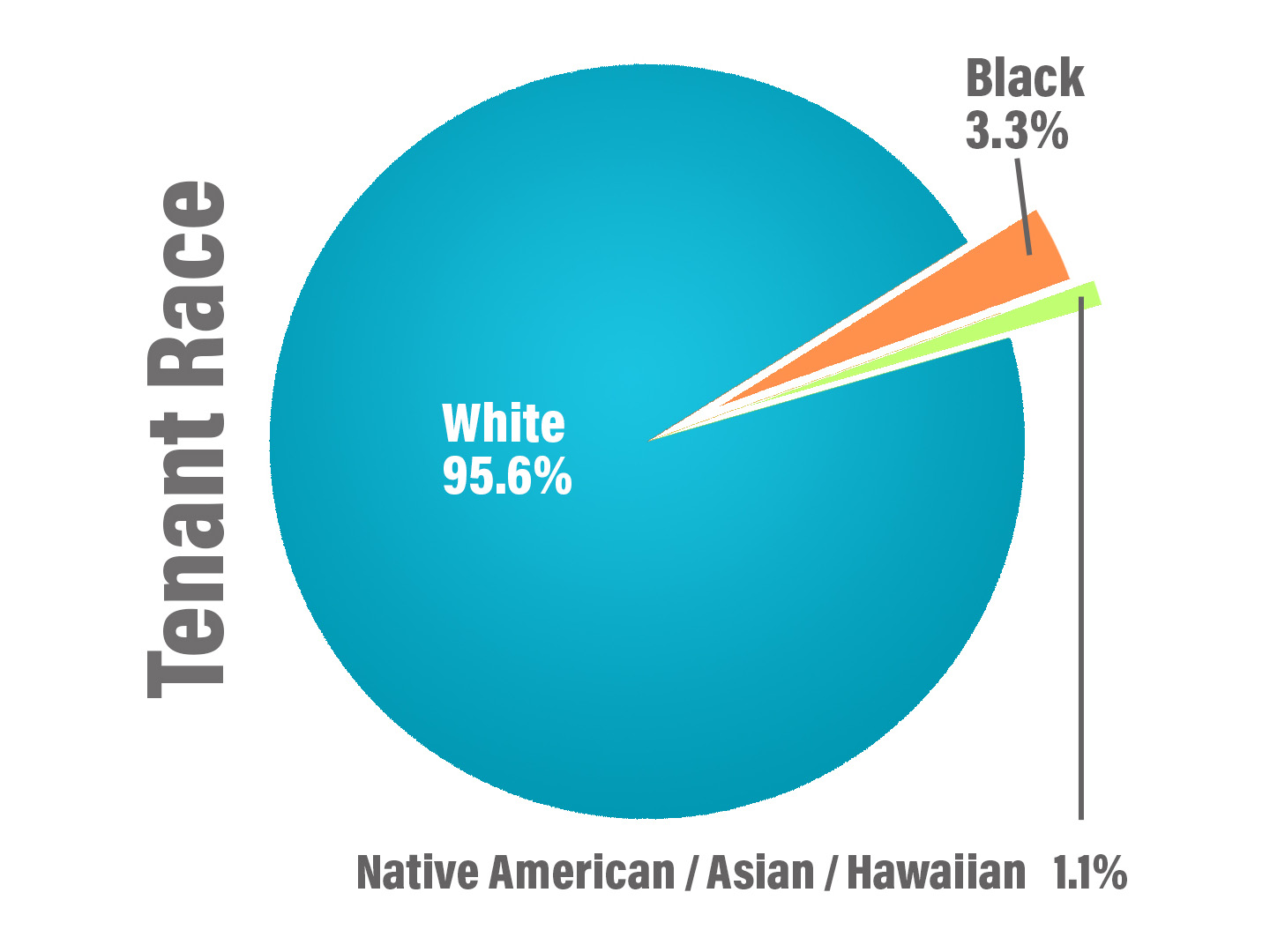
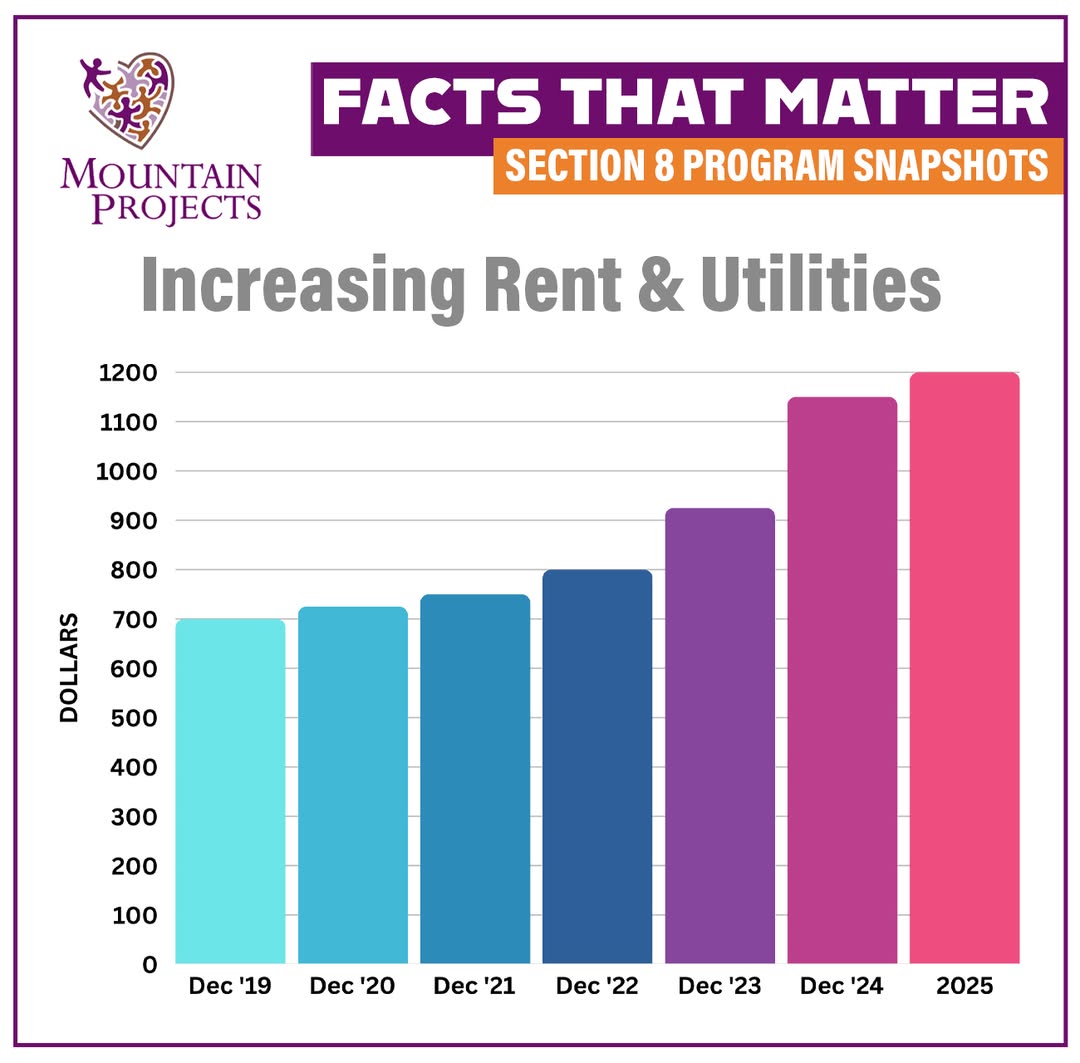
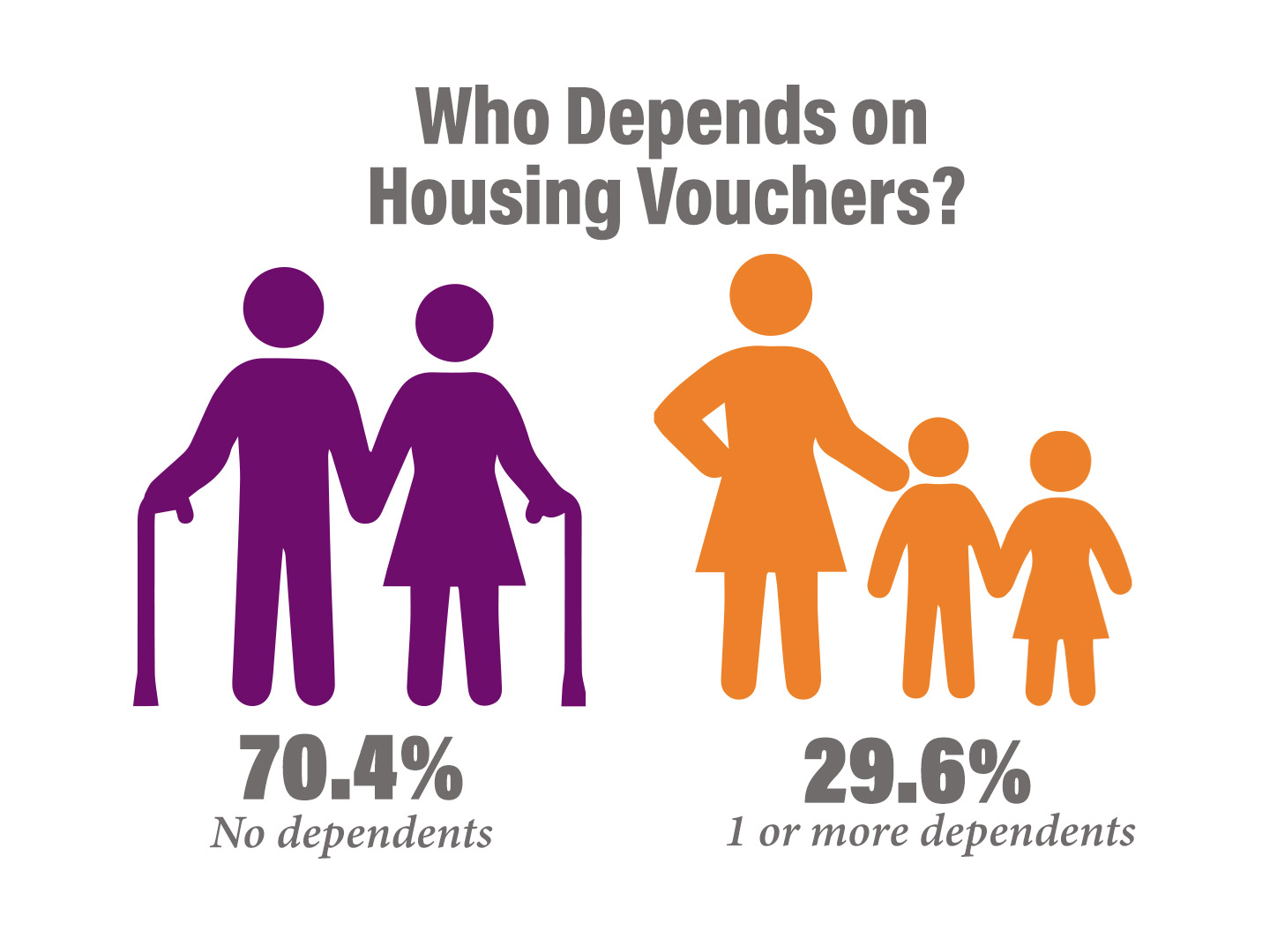
The Mountain Projects HUD/Section 8 Program fosters strong, inclusive communities by providing quality, affordable housing to low-income households in Haywood and Jackson Counties. Through the Housing Choice Voucher (HCV) and Mainstream Voucher programs, families, seniors, and individuals with disabilities gain the stability necessary to improve their quality of life and achieve greater financial security.

The Section 8 Program strengthens local stability by helping families remain housed and supporting landlords with guaranteed rental payments. Stable housing leads to improved health, employment, and educational outcomes for participants.

Program Page